
Grammar School Arts
Education begins in wonder and depends upon the imagination to flourish. This is why the arts form such an important part of our curriculum.
We need the arts to remind us that we are a part of something bigger than ourselves.
While we can and should create, our creations are only possible with the tools, the laws, and the gifts given to us by God. As a result, the glory belongs to him!
-
The mission of The Geneva School fine and performing arts program is to inspire in students a deep awe of God by developing eyes that see and marvel at his creative precision and beauty; ears that hear and long for his orderly design in music, poetry, and prose; voices that proclaim and sing his glory in story, speech, and song; and hands that serve and build his kingdom with creativity and skill.
Fine and performing arts are tightly woven into the fabric of Geneva’s Christian classical education. In each area of study, from grammar school (K4–6th) to dialectic school (7th & 8th) to rhetoric school (9th–12th), every Geneva student is observing, studying, understanding, and, ultimately, creating works of art. We hope that as they explore the various disciplines offered at Geneva, they will see how this exposure is essential to their complete education.
Grammar School Arts
Every Geneva student enjoys exploring and discovering how their gifts may uniquely serve the body of Christ.
The arts remind us that we are a part of something bigger than ourselves; we create art for our own sakes but also for the benefit of others. Art brings joy, wonder, healing, and hope.
Because God is the ultimate creator and we are made in his image (imago Dei), we are intrinsically creative. As students have greater exposure to a variety of fine and performing arts and realize the diverse ways to create, their appreciation of beauty and their desire to learn how to create beauty in this world increases.
-
Grammar
In every grammar school grade at The Geneva School, students begin their exploration of the arts; they study and perform music, participate in the performing arts, and investigate and create artwork, building a foundation for an aesthetically rich liberal arts education.

Fine and Performing Arts in Grammar School
The fine and performing arts are for every Geneva student to explore and discover—each student has gifts that uniquely serve the body of Christ. Our desire is that students will find fulfillment and satisfaction in using those gifts to bless others and bring glory to God, who made them in his image and has called them to join him in creating beautiful work to share with the world.
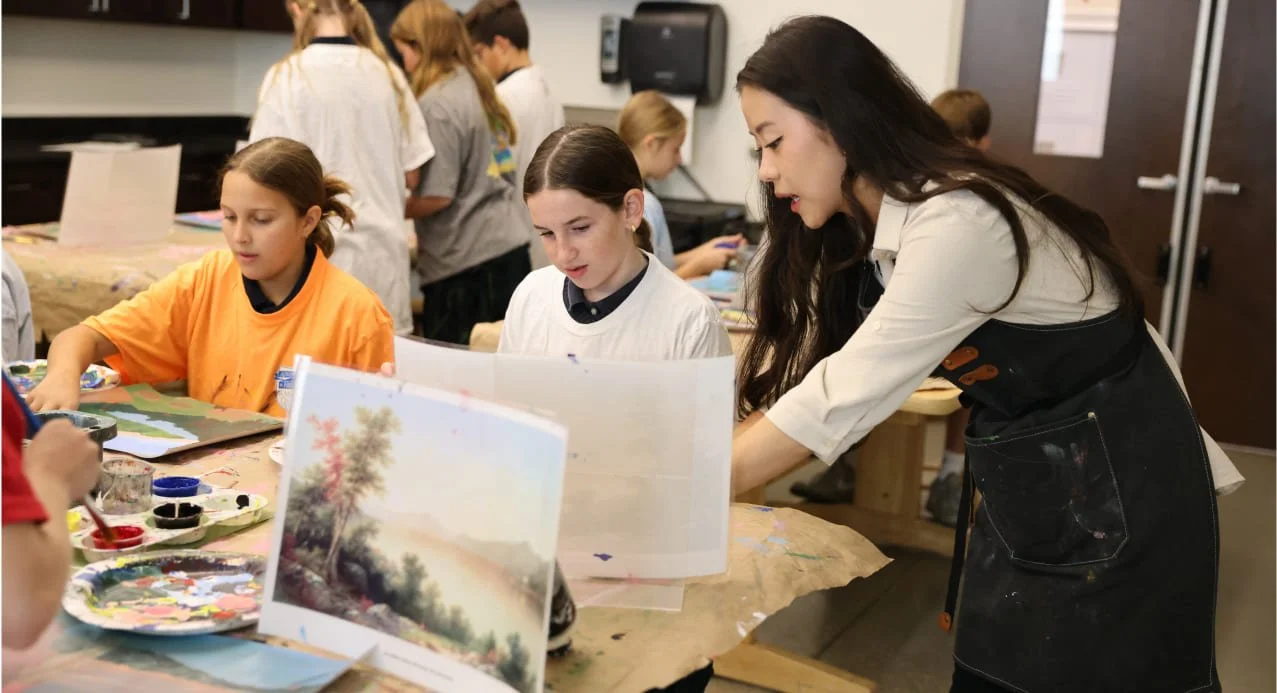
Introduction to the Arts
Students in the grammar school learn foundational concepts in the fine and performing arts using age-appropriate methods that set students up for growth and success as they continue studying in the arts.
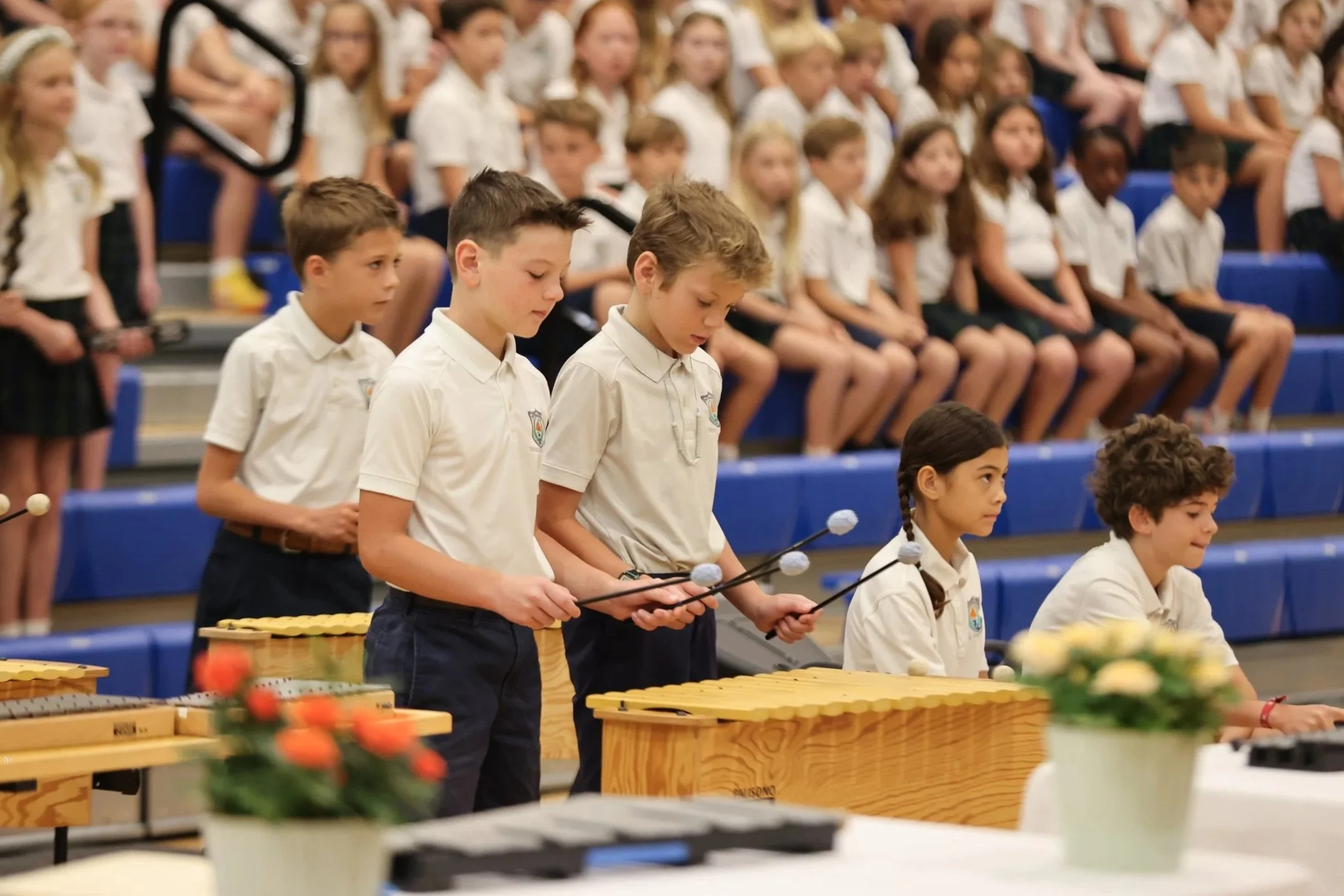
Music Study
During grammar school music classes, students begin a general music study with vocal exploration, singing, and playing games.
Young musicians learn the Kodaly and Orff methodologies, providing the opportunity to learn through visual, auditory, kinesthetic, and tactile experiences, which enhance their ear training, audiation, rhythm reading, and technique. Students also learn the soprano and alto recorders.
Instrumental ensemble training begins in third grade in our Philharmonia Orchestra and our Percussio Orff Ensemble. In these cocurricular ensembles, students can learn the fundamentals of music reading, tempo, dynamics, and ensemble unity on their choice of instrument.
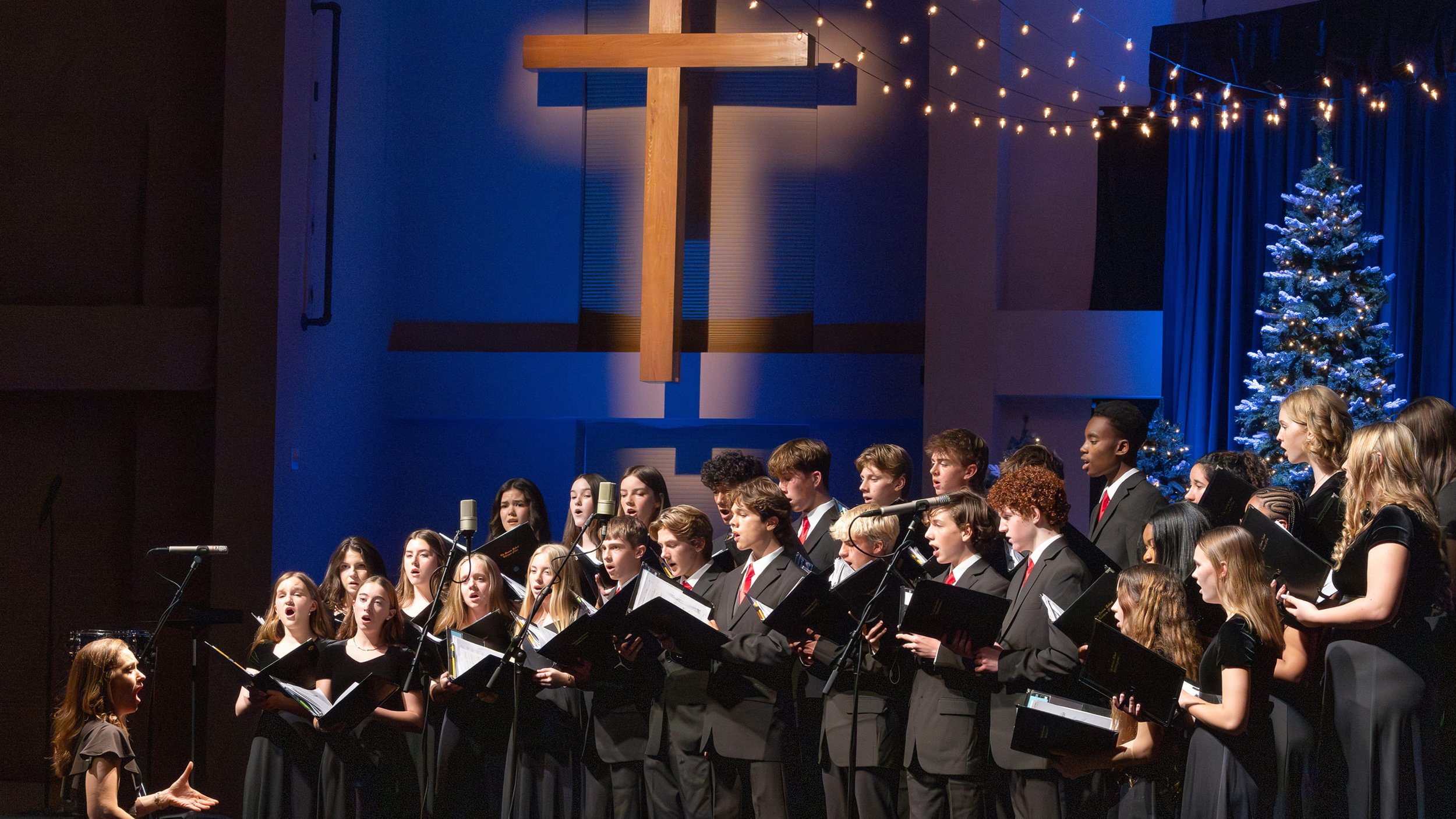
Choral singing is part of the life of the school. In grammar school, students begin singing songs and hymns, first in unison, and then in parts (harmony) through rounds, descants, and partner songs, starting in kindergarten. Grammar school students who particularly enjoy ensemble singing are encouraged to join our Brioso Children’s Choir, where they can polish ensemble skills and perform together regularly.
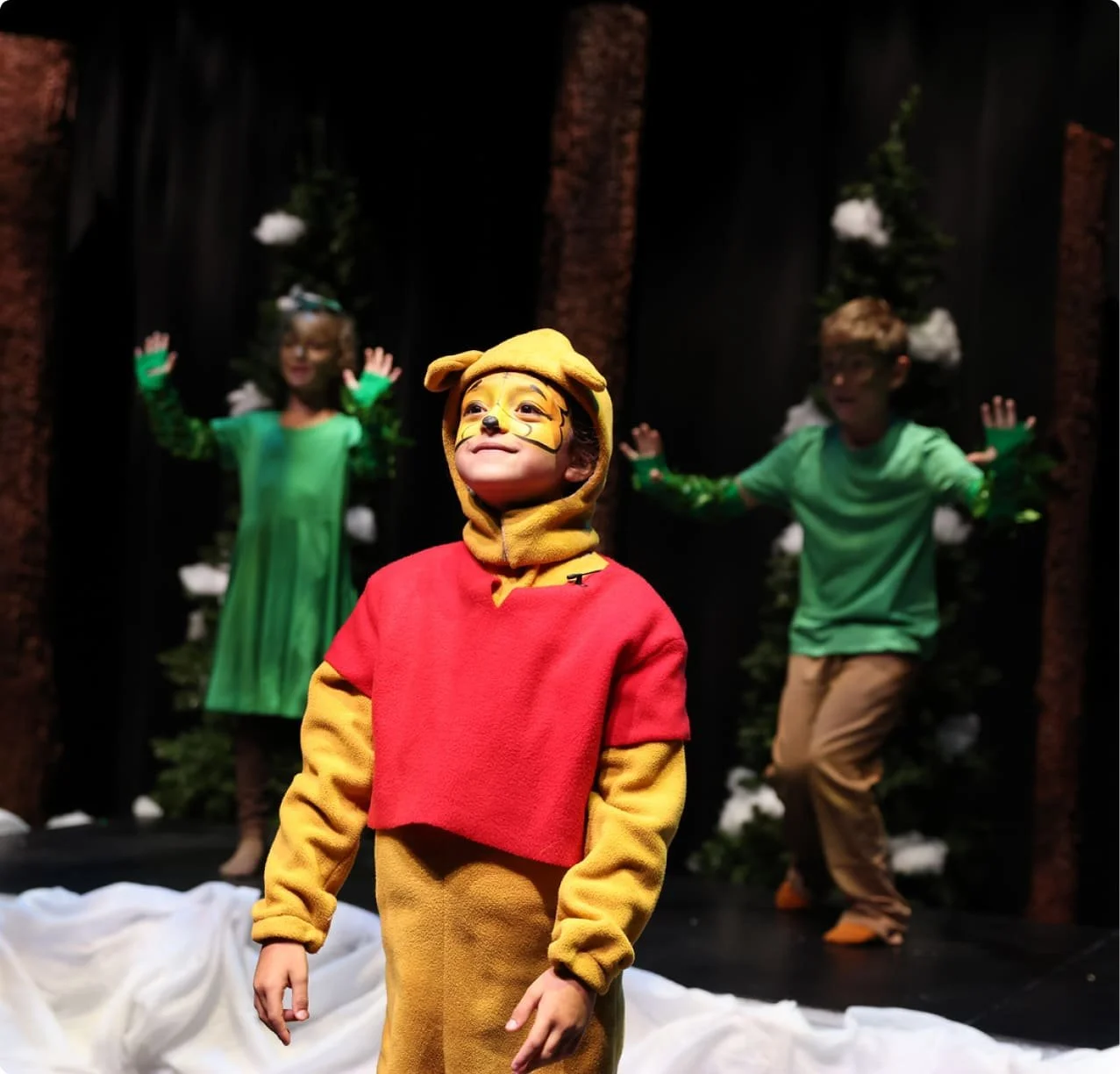
Performing Arts
All grammar school students, from K4 through 6th grade, are given a chance to bring stories from their curriculum to life on stage through the presentation of grade-level performances for family and friends.
These experiences on the stage serve as an introduction for the students to the world of theatre. Learning lines, speaking in front of friends and family, working with one another to present a play, and following choreographed stage directions lay the foundation for the presentations, performances, or plays students may participate in during the dialectic and rhetoric school years, including the culminating experience of senior thesis presentations.
Students delight family and friends with performances throughout their grammar school years, from K4’s Three Piggy Opera and kindergarten’s presentation of the Thanksgiving play to 1st grade’s The Tale of Peter Rabbit, 2nd grade’s Eeyore’s Friends Build a House, and 3rd grade’s Charlotte’s Web, from 4th grade’s The Adventures of Robin Hood and 5th grade’s Brave and Free to 6th grade’s The Hobbit. As they progress year to year, they grow in confidence and learn the power of storytelling through theatre.
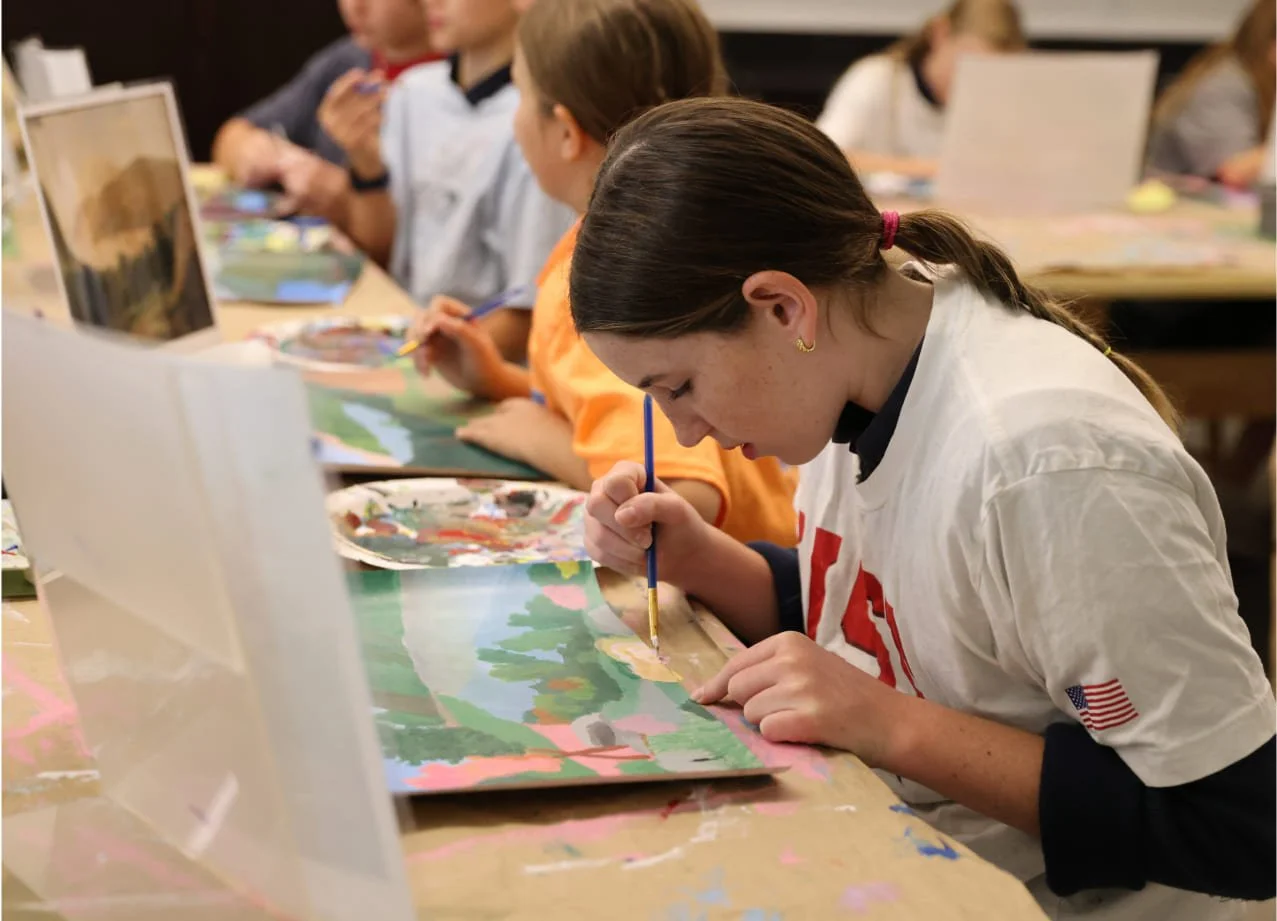
Visual Arts
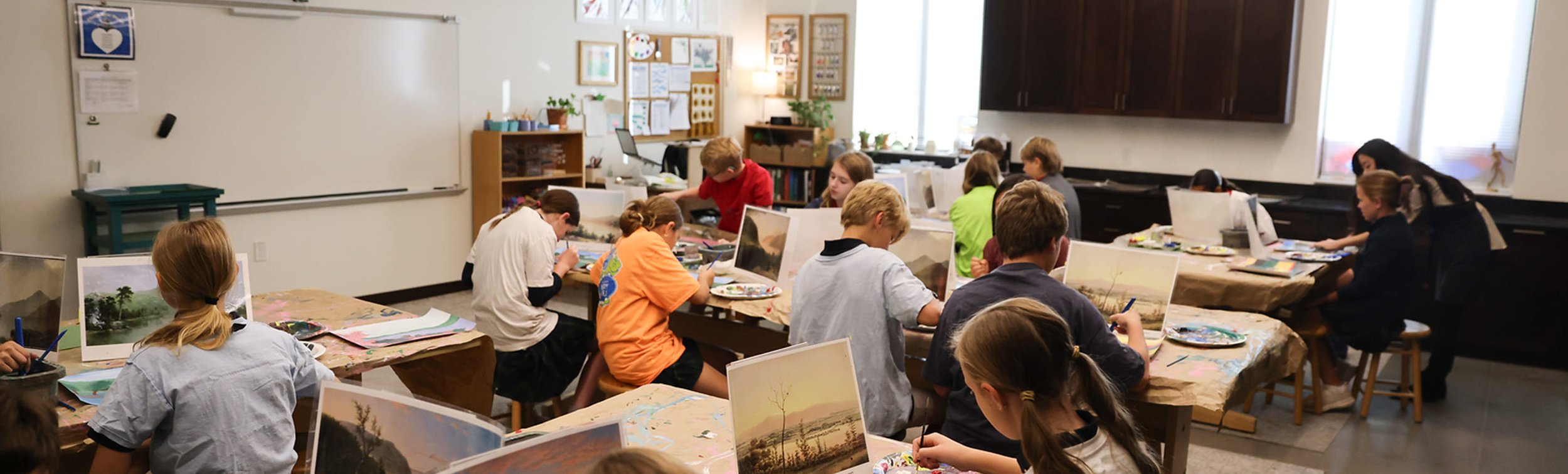
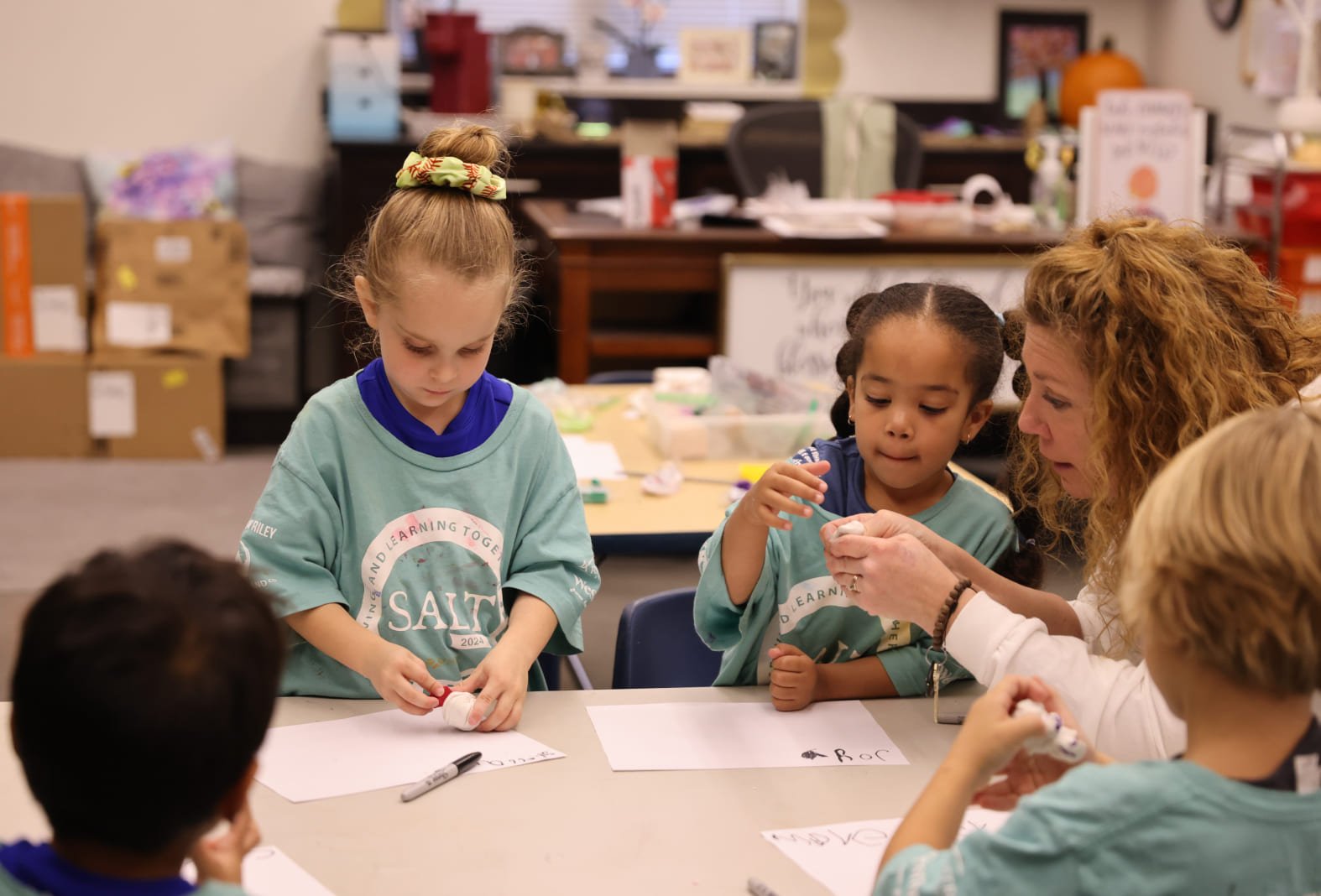
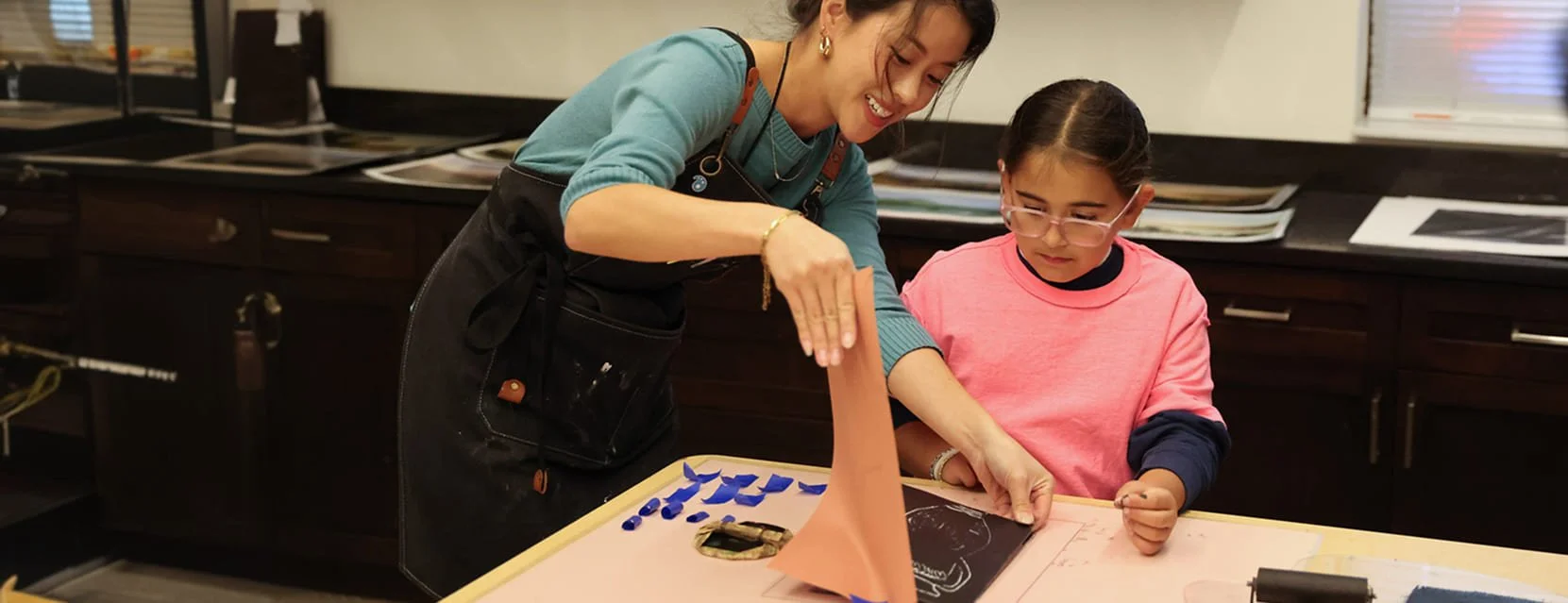
In grammar school art classes, students experiment with a variety of media, including watercolor, acrylic paint, soft pastels, oil pastels, textiles, clay, and ink.
Students move from learning and understanding the basic elements of art—line, shape, color, form, and texture—to developing their own emerging sense of style and taste preference in the visual arts.
Teachers use directed drawing exercises to help students understand the fundamental and foundational aspects of the visual arts. Students also observe and recreate their own versions of masterworks, from K4 through 6th grade. During the grammar school years, students make connections between what they are studying in history and literature with what they are creating, reinforcing the idea that all subjects and disciplines are intertwined.
In every grammar school grade at The Geneva School, studying and performing music, participating in the performing arts, and exploring and creating in the visual arts are vital aspects of an aesthetically rich liberal arts education.

Ready to learn more?
We look forward to hosting you for a tour.