
Upper School Arts
Fine and performing arts at Geneva are more than electives. They are formation. Students learn to see the world as God made it and respond with creativity, craftsmanship, and a heart for His glory.
We need the arts to remind us that we are a part of something bigger than ourselves.
While we can and should create, our creations are only possible with the tools, the laws, and the gifts given to us by God. As a result, the glory belongs to him!
-
The mission of The Geneva School fine and performing arts program is to inspire in students a deep awe of God by developing eyes that see and marvel at his creative precision and beauty; ears that hear and long for his orderly design in music, poetry, and prose; voices that proclaim and sing his glory in story, speech, and song; and hands that serve and build his kingdom with creativity and skill.
Fine and performing arts are tightly woven into the fabric of Geneva’s Christian classical education. In each area of study, from grammar school (K4–6th) to dialectic school (7th & 8th) to rhetoric school (9th–12th), every Geneva student is observing, studying, understanding, and, ultimately, creating works of art. We hope that as they explore the various disciplines offered at Geneva, they will see how this exposure is essential to their complete education.
Upper School Arts
The fine and performing arts are tightly woven into the fabric of the Christian classical education at Geneva, and every Geneva student enjoys exploring and discovering how their gifts may uniquely serve the body of Christ.
The arts remind us that we are a part of something bigger than ourselves; we create art for our own sakes but also for the benefit of others. Art brings joy, wonder, healing, and hope. Because God is the ultimate creator and we are made in his image (imago Dei), we are intrinsically creative. As students have greater exposure to a variety of fine and performing arts and realize the diverse ways to create, their appreciation of beauty and their desire to learn how to create beauty in this world increases.
All true education begins in wonder and depends upon the imagination to flourish. This is why the arts form part of the core curriculum from K4 through 12th grade. Students study choral and instrumental music, studio art, and drama through 6th grade, while electives in the dialectic and rhetoric schools are designed to allow students to engage more deeply in one of these areas of the fine and performing arts.
-
Dialectic
As students mature, they begin making more complex connections. In their fine and performing arts classes, they have the opportunity to ask questions and dig deep in the area of study they choose: art, band, choir, drama, jazz, or orchestra.
-
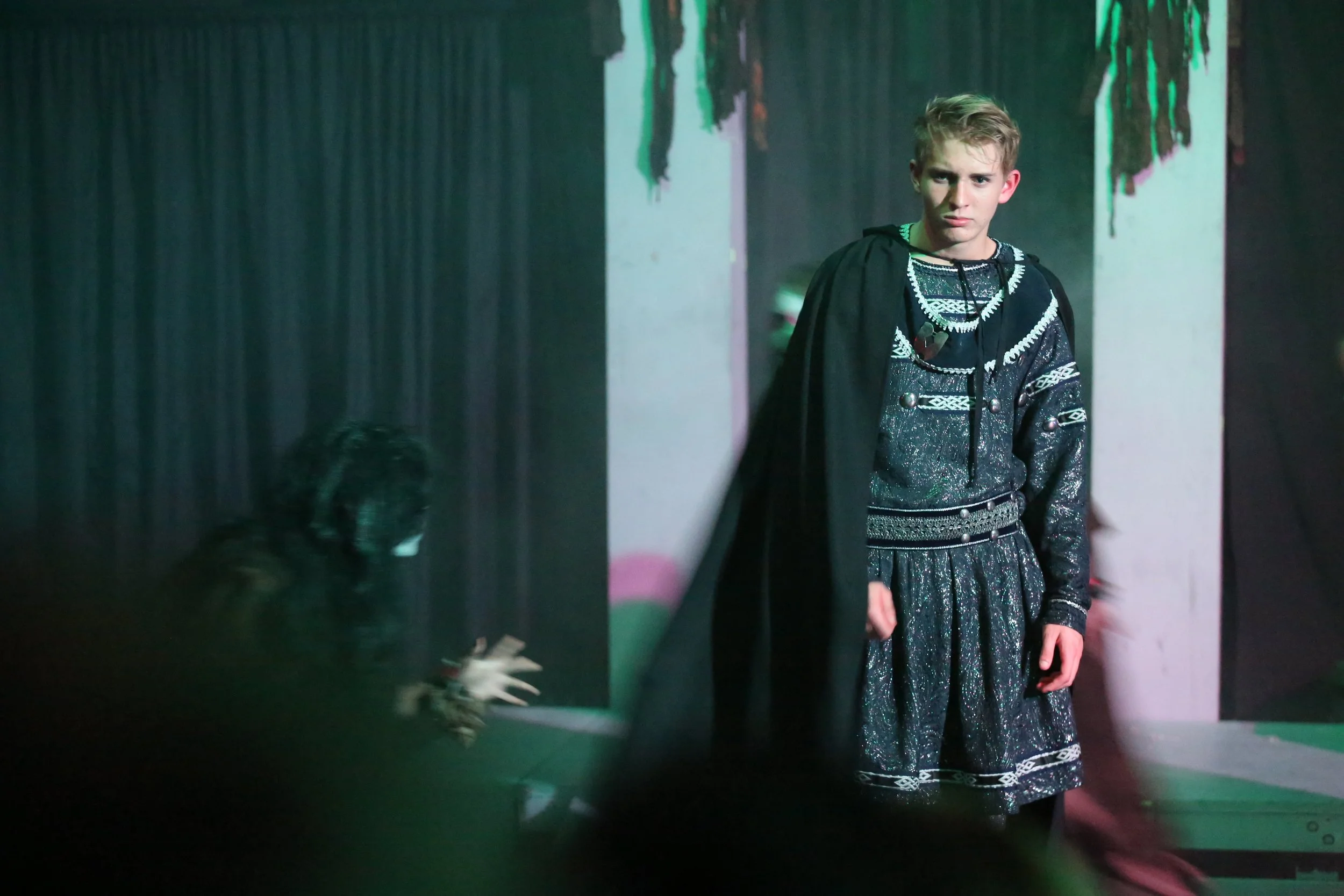
Rhetoric
During the rhetoric years, students continue to hone their creative abilities. The ideas and skills they have cultivated through instruction, discussion, and practice now come into play as they strive to create beautiful art in their chosen discipline.
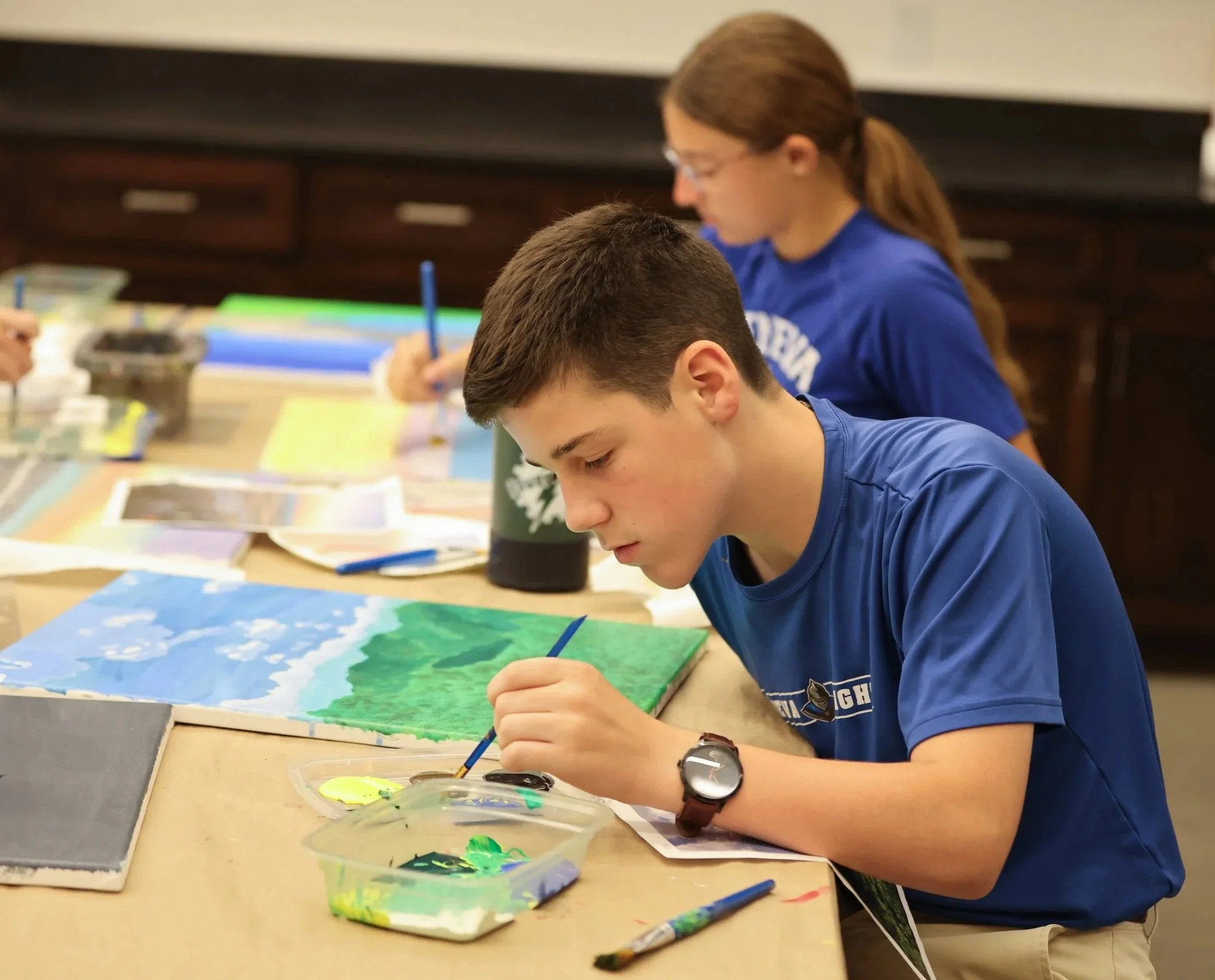
Dialectic School
Creativity and art-making are central to our being as bearers of God’s image.
-
Students in dialectic school who elect band (winds and percussion) or orchestra (strings) choose an instrument (or two!) and spend the year developing their playing technique while hearing how their instrument’s timbre contributes to the overall ensemble’s sound. Our goal with each of these ensembles is that students start in dialectic school will carry forward into rhetoric school as they continue to play and develop their skills.
-
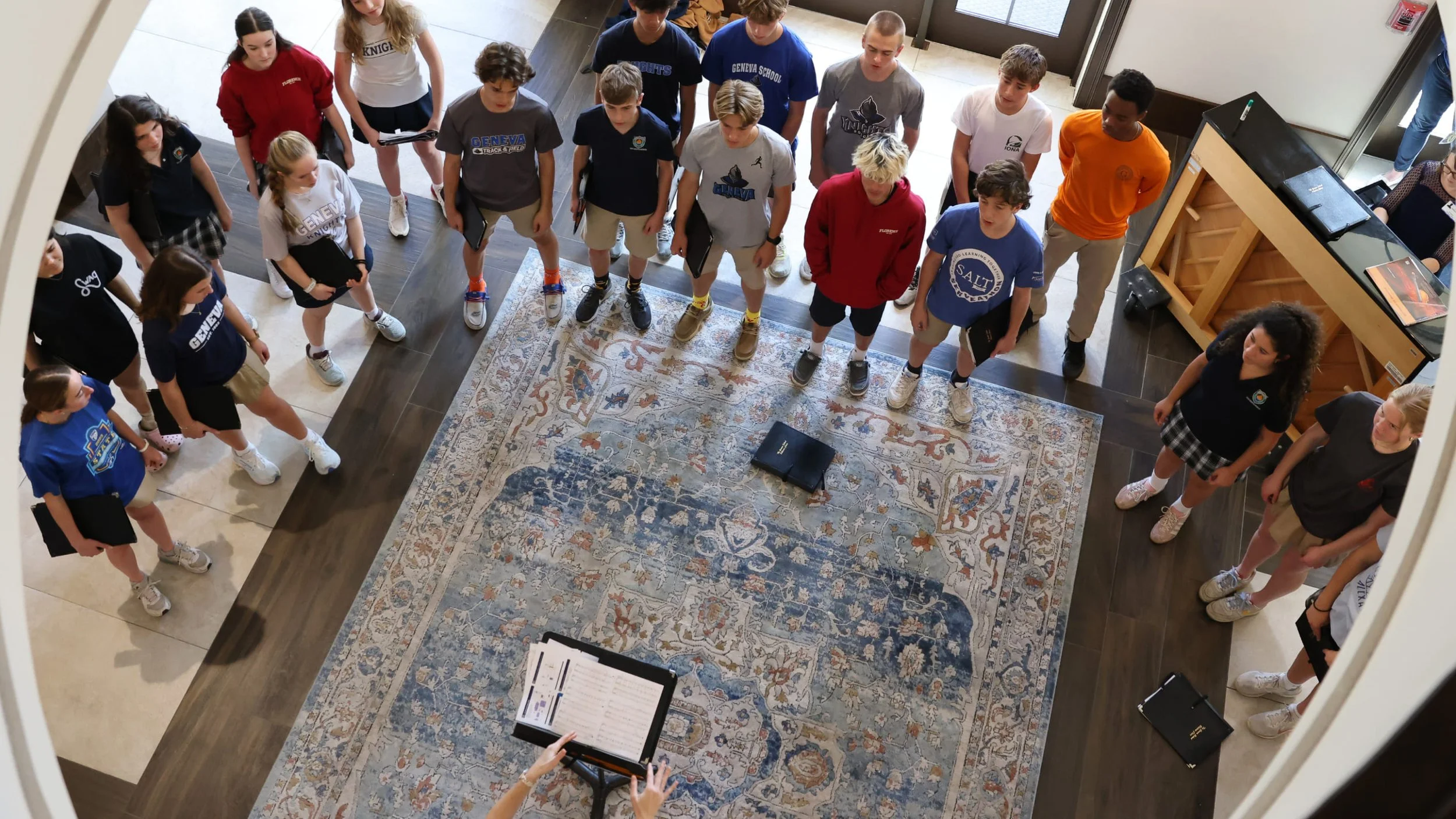
Students in dialectic school who elect to take choir develop musicianship and gain confidence as a singer. Since this co-ed group is full of changing voices, careful attention is given to normalize that process. As a result, these students perform three- and four-part SATB (soprano, alto, tenor bass) music. The Dialectic Choir performs in the Florida Vocal Association’s Concert Music Performance Assessment, where members receive feedback and ratings from experienced adjudicators around Florida.
-
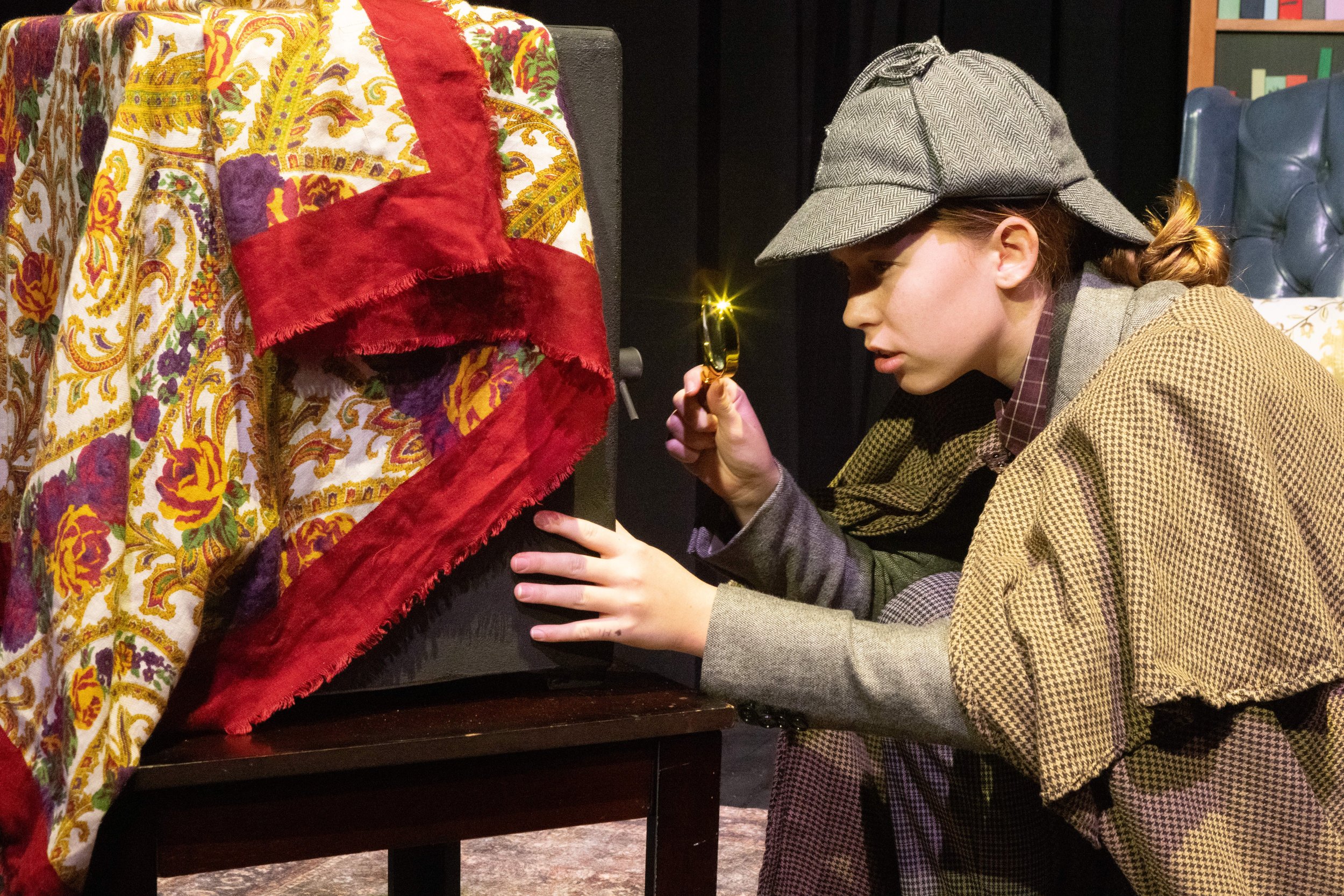
Geneva’s theatre program tells stories on stage that resound with truth, wrestle with hardships and victories and tragedy and joy, and celebrate the goodness and grace of God to his children. Drama classes seek to instruct those dialectic school students who have identified theatre as a potential area of interest in the basics of acting and theatre production—what it takes to be an actor, how a good crew member operates behind the scenes, what the techniques are that improve stage presence, projection, vocal control, stage movement, and so on.
-
Drawing is the foundation of the visual arts. Drawing teaches students to use their eyes most keenly and to see the world as it really is. Students who elect art in the dialectic school will be drawing a lot! They will be drawing from life and learning to develop close observational skills as they render three dimensions in two.
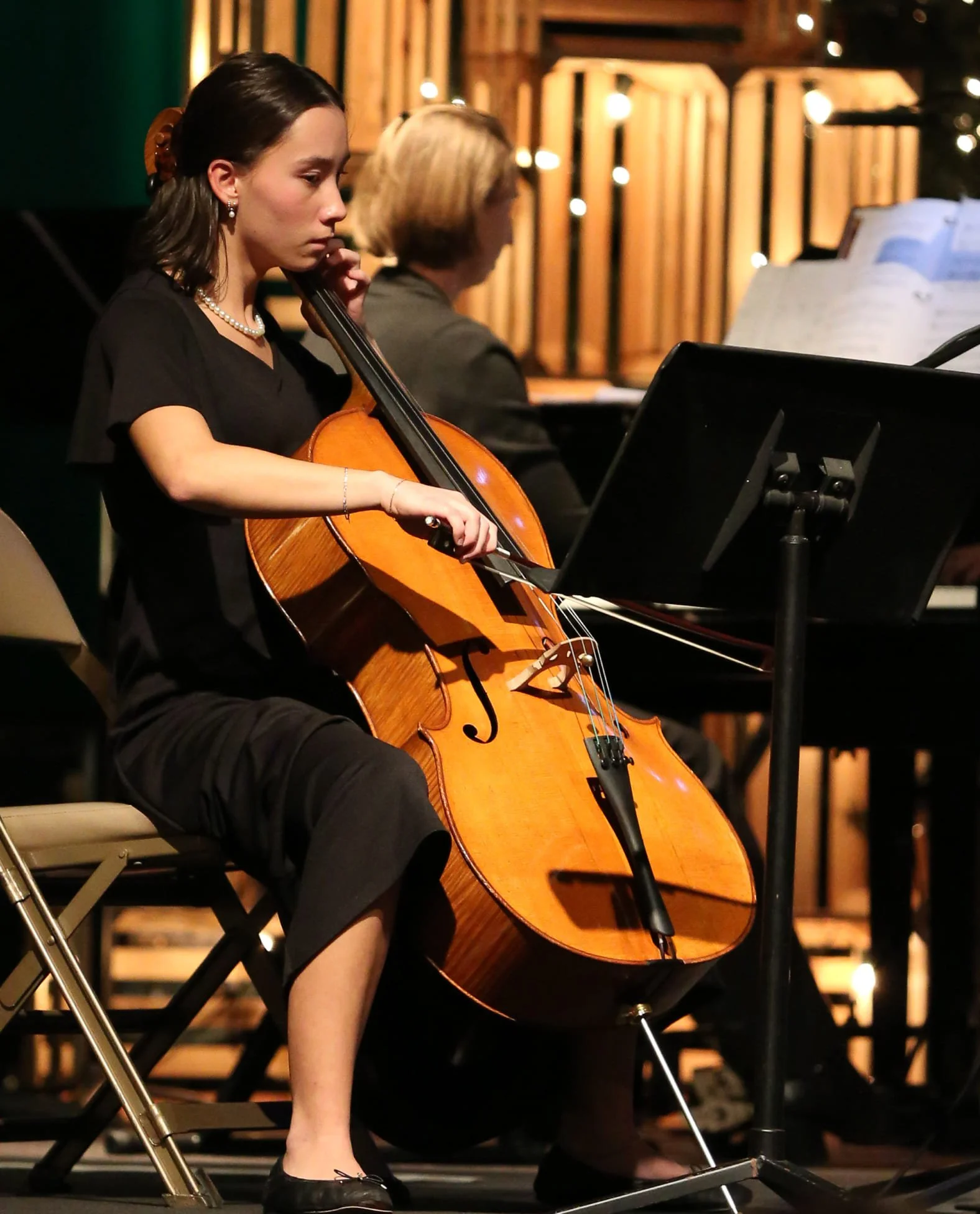
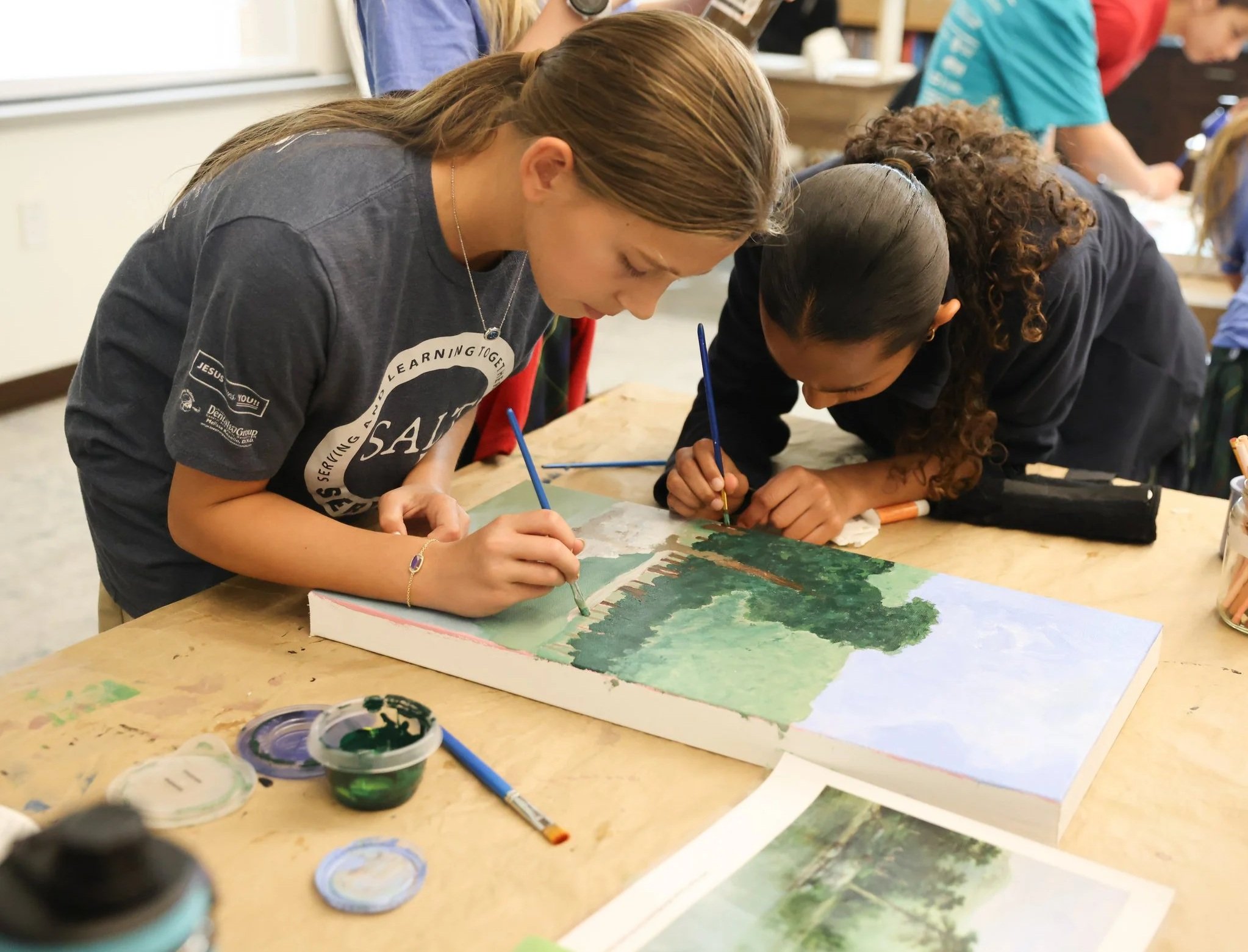
Rhetoric School
By the rhetoric years, students have learned to see the world as it really is. Now they begin to respond to it. The foundations built in the dialectic school become a voice, and students use that voice to create work that is honest, skilled, and formed by a sense of purpose larger than themselves.
-
Music Theory (AP) is a challenging course designed for seniors who are excited and inquisitive about what makes music such a compelling art form. Students must meet academic and musical prerequisites. All students taking the course take the AP Music Theory Exam in the spring semester, which could qualify them for university music credits. However, the scope and application of the course is not limited to the content of the AP Music Theory Exam. The overarching goal of this course is to develop a “working vocabulary” for music theory and composition through study of great works.
-
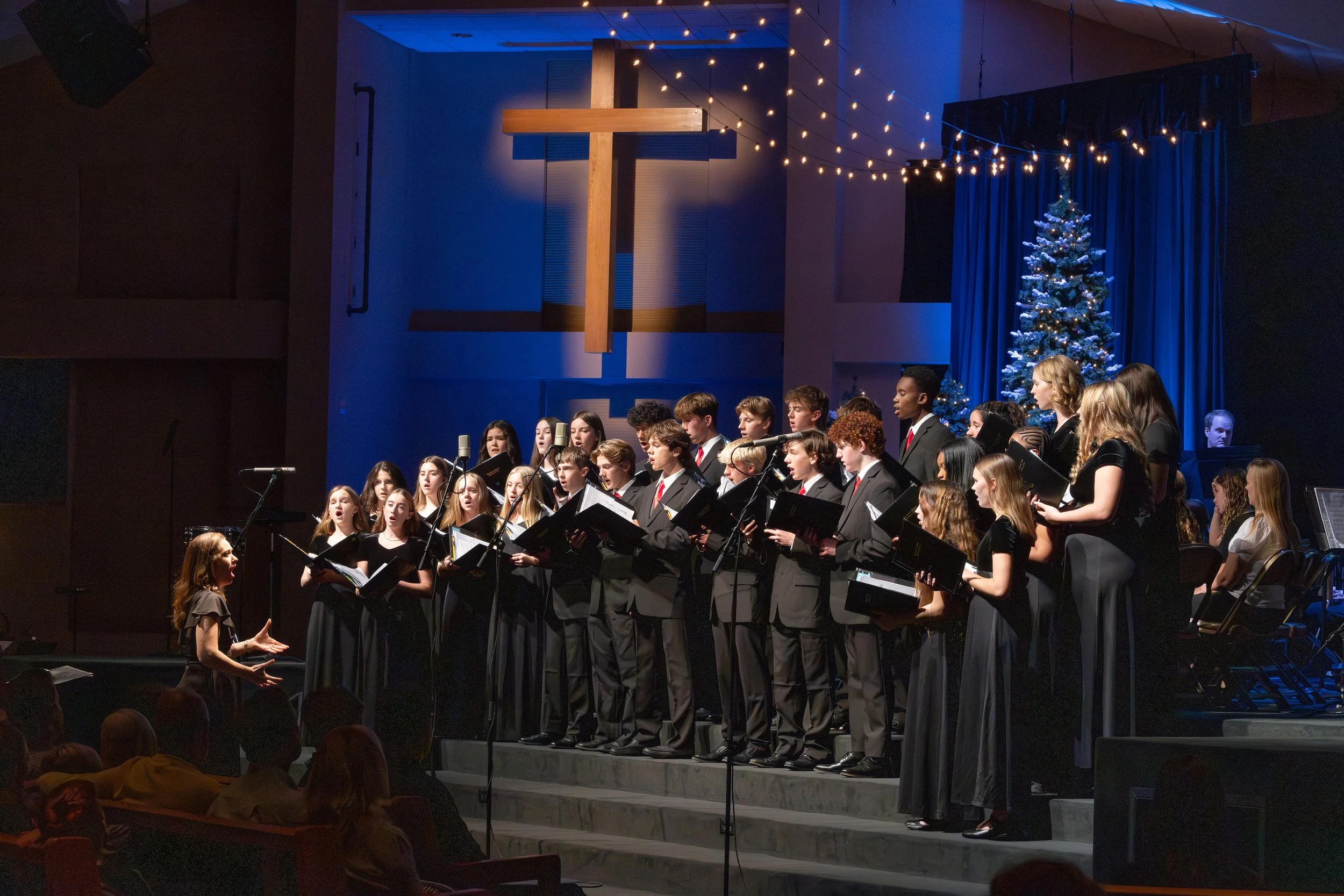
Rhetoric choir classes seek to reflect the beauty, gratitude, discipline, and community found in God’s redemptive story through music. The Rhetoric Choir ensemble assists with chapel services and school ceremonies while studying and performing a wide range of choral works from different cultures, styles, traditions, and historical periods. Through this diverse repertoire, students strengthen sight-singing abilities, deepen their understanding of music theory and history, and learn to value each singer’s unique role in the group. Ladies Choir provides a supportive and enjoyable environment for young women to grow musically and vocally. Open to both beginning and advanced singers without audition, the group performs music written specifically for women’s voices while building musicianship, confidence, and teamwork. The Rhetoric Chamber Choir is the school’s premier high school ensemble. Students often participate throughout all four years, performing over forty pieces across many genres and representing the school through tours, assessments, and community performances while building strong camaraderie and musical excellence.
-
Students in 9th–12th grade can pursue instrumental music study through Rhetoric Band, Rhetoric Orchestra, Rhetoric Volante Guitar, Rhetoric Advanced Bravura Guitar, or Jazz Ensemble, with additional opportunities in Chamber Orchestra. Research shows that studying an instrument supports higher academic achievement, strengthens learning capacity, and promotes joy, while also teaching discipline, patience, and persistence. Band and orchestra classes help students strengthen foundational musical skills on their chosen instruments while learning music reading, rhythm, musical form, instrument care, and proper playing techniques. As students progress, they develop ensemble skills and learn to blend their sound within a full group setting. The guitar program highlights the instrument’s rich history and versatility. The Volante Ensemble welcomes beginners and focuses on classical technique, music reading, ensemble performance, and musical expression. The auditioned Bravura Ensemble expands these skills with advanced technique and styles such as jazz, folk, and popular music. The Jazz Ensemble introduces students to traditional big band performance while exploring jazz as an important American art form.
-
In Journalism: Student Magazine, students learn the basics of journalism writing, photography, and design. They learn to use many of the Adobe products, including InDesign, Photoshop, Illustrator, and Acrobat. Throughout the year, students create three issues of The Post, a student magazine, distributed to the student body in the fall, winter, and spring. They also produce Geneva’s literary magazine, the Asterope.
-
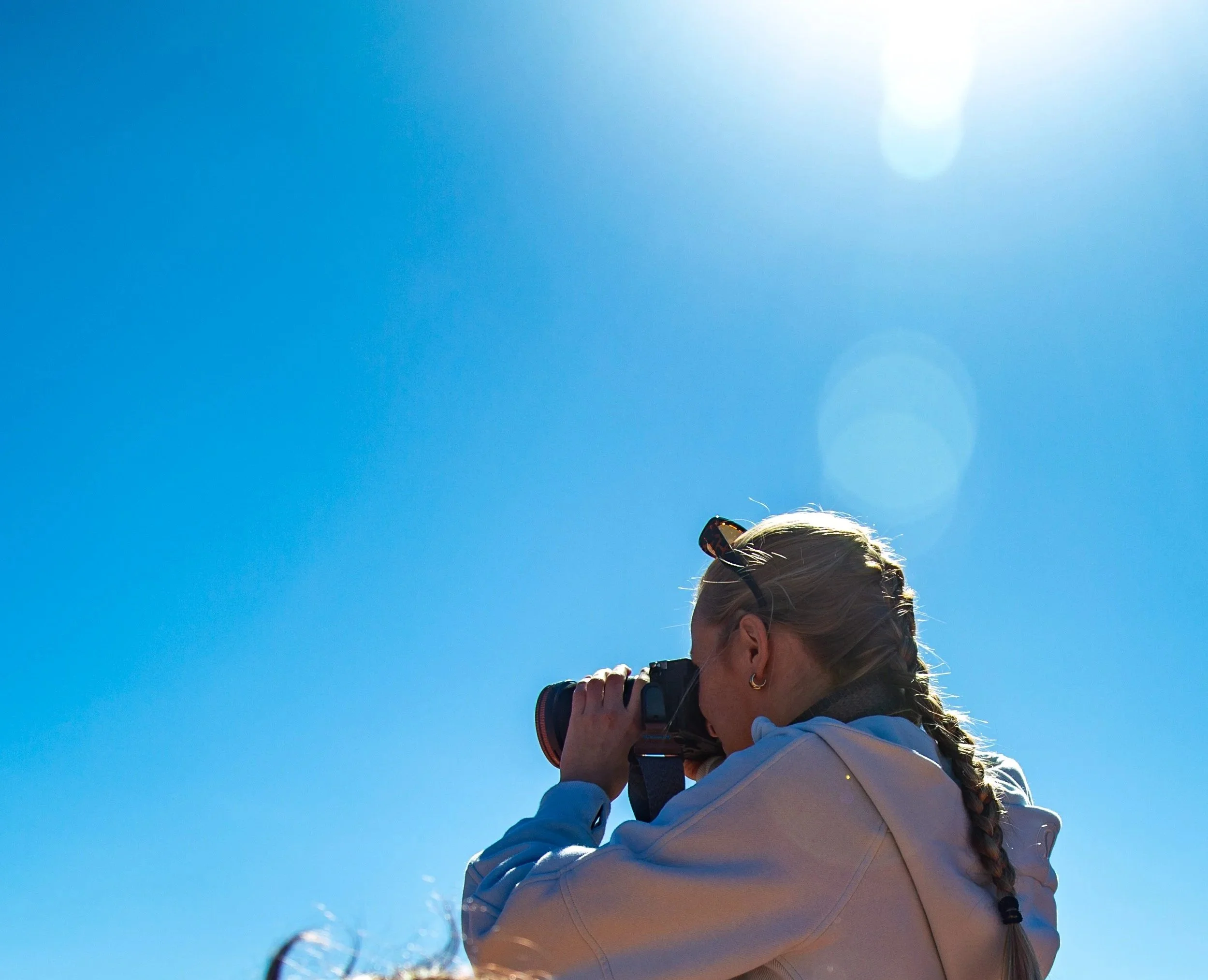
Digital Photography I introduces students to fundamental photography skills through two main areas: camera operation and image processing. Students learn photographic composition, capture images, and print and enhance their work while applying professional standards. Later in the course, they explore creative techniques to express truth and beauty through photography. Digital Photography II expands these skills by focusing on the study and control of light, including natural light, flash, and studio lighting. Students learn design principles, shoot in RAW format, and develop an efficient Photoshop and Lightroom workflow. Advanced courses emphasize theme-based assignments, digital editing, and producing images suitable for commercial or publication standards. Students also learn studio lighting techniques using strobes while practicing creative problem-solving. AP Digital Photography focuses on developing each student’s personal creative style through a year-long investigation of a chosen theme. Students build advanced technical skills, create a fifteen-image portfolio, and submit it to the AP Board for evaluation.
-
Stagecraft is the art form of making a vision come to fruition through scene construction and prop design. The students learn the skills necessary to work in theatrical capacities from the scene shop to backstage. Students build sets and props for the rhetoric school plays and help with the props and sets for dialectic and grammar school plays as they are able. The goal is for the students to be capable and confident enough to realize many of their creative ideas.
-
The goal at the rhetoric level is for students to use their visual tools of communication to pursue their ideas and find their voices. Students in Art I, Art II, Art III, Art IV, and AP Art are combined in one class. Combining students of varying skill levels inspires the group and removes any hindrance to a student advancing at an accelerated pace. The fundamental procedures of studio art—the “how to” aspect—are generally taught early on. Their mastery, however, takes a lifetime to achieve. In rhetoric art, students are taught studio fundamentals such as drawing, painting, printmaking, and 3D. These skills are not difficult to grasp from a procedural standpoint and do not change significantly from year to year. Students participate in all projects throughout their years in art, regardless of what level they are in. What changes, however, is their mastery of these skills. Students are expected to demonstrate increased mastery over their chosen media with each passing year.
-
The Geneva School drama department views theatre as a collaborative art that reflects God’s creativity and tells meaningful stories about the joys, struggles, and complexities of human life. Through performance, students explore truth while celebrating God’s goodness and grace. Rhetoric drama classes teach acting techniques, improvisation, scriptwriting, directing, production, and theatre history. The program emphasizes theatre as a way to glorify God through “sub-creation,” using stories and experiences to create meaningful performances while developing humility, teamwork, creativity, and a love for collaborators and audiences.
-
A journalist is a storyteller. This course allows a student to develop fundamental journalism skills, gain an understanding of the history of journalism, grapple with the ethics associated with journalism, and learn management techniques related to the production of journalistic media. What is expected of students varies according to skill development relative to their years of study. The assignments for this class are divided into four quarters. The first quarter focuses on journalistic standards and skill development, including graphic design, interviewing, and photography, along with small-scale business management. Quarters two and three focus on the production of The Geneva School yearbook. In the last quarter, students move on to a variety of other projects and begin developing the following year’s yearbook theme.

Ready to learn more?
We look forward to hosting you for a tour.